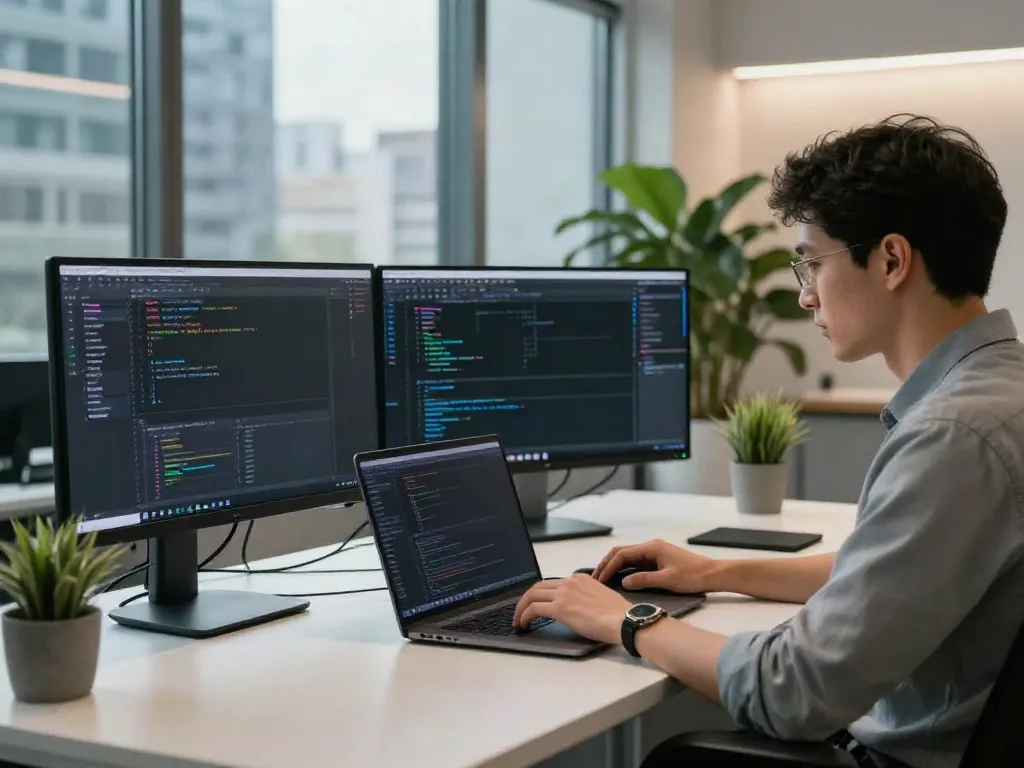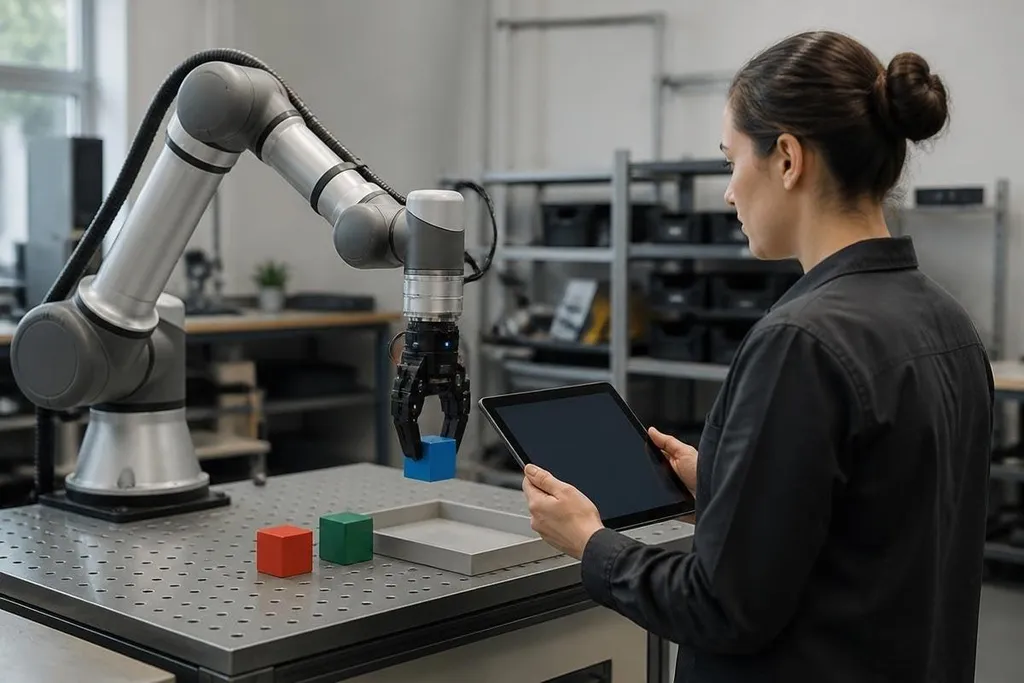
A language model can turn a plain task description into software steps, while a vision model can help a robot connect words with objects in its workspace. That changes how people build and control robots, but it doesn't remove the need for tested hardware, safe limits, or careful setup.
- Robots can work from spoken or written task descriptions
- Vision and language can help connect objects with actions
- Safety checks still need rules outside the generative model
From fixed commands to task descriptions
Traditional robot software often depends on carefully defined commands, paths, and conditions. Generative AI adds a layer that can turn a broader instruction into smaller tasks, such as finding an object, moving an arm, checking its grip, and placing the object in a marked area.
That layer can reduce the amount of code a technician writes for each new task. It doesn't mean the robot understands the instruction like a person. The system still needs a list of allowed actions, access to sensor data, and a way to stop when the result is uncertain.
The useful change is flexibility. A warehouse robot could receive a new storage rule in ordinary language, then pass the request to software that checks locations, routes, and handling limits before any motor moves.
Vision, language, and movement
Generative AI becomes more useful when it links several inputs. A camera supplies an image, a language model handles the task description, and a control system sends approved movement commands to the robot.
This setup is often called a vision-language-action system. The name describes the path from what the robot sees, through what the instruction means, to what the robot does.
Each part can fail in a different way: the camera may miss an object, the model may read the task incorrectly, or the motion planner may find no safe route. That is why a generated answer should sit inside a checked control loop.
The robot can suggest a grip or a route, but software still needs to test reach, collision risk, force, speed, and the object’s weight before execution.
Generative systems may also help people teach robots. A technician can describe a task, correct a failed step, and add an example through teleoperation, where a person guides the robot directly. The machine then has more information about the task than a written instruction alone would give it.
Where the limits show up
Generative AI works with patterns from its training data. A rare object, poor lighting, a damaged part, or an unusual surface can leave the system without a reliable answer. A fluent response can still produce an unsafe command.
The robot also needs current information. A model may know what a tool is called, but it doesn't know where that tool sits unless its sensors or software state provide that detail. It can't infer a gripper’s real force limit from language alone.
A claim about generative AI needs the robot, software setup, and deployment result beside it. Robot24's reporting on generative AI can give you that record before you judge what the software changes in practice.
I’d treat generative AI as a new software layer, not a replacement for robot engineering. The practical test is whether it reduces setup work while keeping failures visible and recoverable.
What changes for robotics teams
A team adding generative AI has more work than connecting a model to a robot interface. It needs clear boundaries around what the model may suggest, what software must check, and what a person must approve.
Use this checklist before putting a system near production equipment:
- Define allowed actions: limit the model to commands the robot can safely run.
- Check sensor state: confirm that images, force readings, and location data are current.
- Test unusual cases: include blocked paths, missing objects, poor lighting, and damaged parts.
- Keep a stop path: let a person or safety controller halt motion without waiting for the model.
- Record each decision: save the instruction, sensor input, generated plan, and robot result for later review.
These checks also make costs easier to judge. If a model needs constant human correction, the team may save little software time. If it handles routine task changes while the robot keeps strict motion limits, the same system may reduce the work needed for each new setup.
The next useful measure is not how natural the robot’s reply sounds. It is how often the system completes a defined task, how often a person must step in, and whether those results hold across new objects and changing conditions.